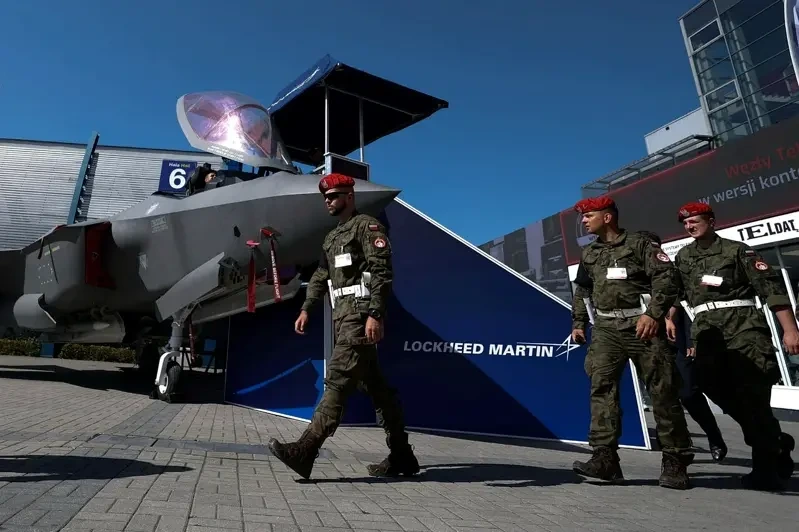
The New York Times reported on the 16th that Saudi Crown Prince and de facto leader Mohammed bin Salman had long sought to purchase advanced F-35 fighter jets from the United States, and President Trump ultimately agreed to the sale in November 2025. While this $24 billion arms deal has yet to be finalized, U.S. officials revealed that intelligence officers have warned in internal reports that the transaction could pose a risk of Chinese espionage.
Saudi Arabia has maintained a military partnership with the United States for decades and is a major purchaser of U.S. weapons and defense equipment; however, Riyadh also acquires ballistic missiles from China. The Chinese military is assisting Saudi Arabia in manufacturing ballistic missiles, establishing production facilities, and enhancing its missile operational capabilities.
U.S. officials state that intelligence analysts believe China could acquire F-35 fighter jet technology through espionage activities in Saudi Arabia or by leveraging the military and security partnership between the two nations. A report released several months ago by the U.S. Defense Intelligence Agency (DIA) raised concerns regarding the Chinese military’s access to Saudi bases and the use of Chinese technology in Saudi telecommunications infrastructure; it also questioned whether the U.S. and Saudi Arabia could ensure the security of facilities housing F-35 technology.
The Pentagon is particularly concerned about the security of the F-35’s advanced radar and surveillance technologies. The latest intelligence report suggests that access to relevant facilities should be restricted to Saudi and U.S. military officers and contractors. It also inquires whether Saudi Arabia is willing to further limit interactions with the Chinese military, intelligence personnel, and related entities, and whether it would agree to remove equipment from Chinese tech companies Huawei and ZTE from its telecommunications networks, router infrastructure, and defense facilities.
This report has circulated among various government agencies and congressional offices. The New York Times previously reported that when the Trump administration discussed this arms sale in the fall of 2025, the DIA had already issued a more general report regarding similar risks. As the arms sale moves forward, the new DIA report raises more serious concerns, including issues of a technical nature.
The U.S. State Department submitted the arms sale proposal to Congress for informal approval in June, and some lawmakers and congressional aides have continued to press the administration regarding the concerns raised by intelligence agencies. The State Department, the Pentagon, and the Saudi Embassy in the U.S. declined to comment, while the White House and the Chinese Embassy in the U.S. did not respond to requests for comment.